
Not only chemists, but several known private hospitals are selling medicines at higher prices than MRP, said Singh, adding that the matter was not peculiar to Punjab, but afflicts the whole country.

Ties between India and the United States have been strained in recent years because of trade policies and patent disputes.
The idea is to keep a close watch on real-time price movements, the maximum retail price of medicines and their availability.

'The world over, everybody is asking for the same medicines, same APIs, same KSMs.' 'However, there is just one supplier -- China -- for the entire world.'
Commerce and Industry Minister Piyush Goyal on Wednesday questioned Amazon's announcement of $1 billion investment in India, saying the US retailer was not doing any great service to the Indian economy but filling up for the losses it had suffered in the country. He said that their huge losses in India "smells of predatory pricing", which is not good for the country as it impacts crores of small retailers.
Rising penetration of trade generic medicines is eating into the value growth of the domestic pharmaceutical market, showed a recent analysis. According to a Kotak Institutional Equities analysis, 70-110 basis points (bps) annual dent is expected from trade generics and Jan Aushadhi on Indian Pharma Market (IPM) growth at least until FY27-28 (see chart). Trade generic medicines are those that are not pushed into the market through doctor promotions.
The impact from NELM on the Indian pharmaceutical sector is estimated to be around Rs 6,000 crore.

Pharmaceutical companies which increase prices of their medicines beyond 10 per cent in a year will face regulatory action.

The latest price revision includes mostly cardiovascular drugs, anti-bacterials, anti-herpes, contraceptives and gastrointestinal medicines
For the poorest 20 per cent of Indians, the expenditure on medicines alone is 85 per cent of what they spend on their health, according to the National Sample Survey.

An International Policy Network report in 2010 found that seven per cent of drugs bought from wholesale traders were substandard, and 3.6 per cent of the drugs from traders contained no active ingredient whatsoever.

India, the world's third-biggest oil consumer, has conveyed to OPEC countries its concern over high oil prices that are threatening to impact the nascent economic recovery after the devastating pandemic. New Oil Minister Hardeep Singh Puri has made phone calls to key OPEC nations to convey the desire for an affordable price for consumers. After calling his counterparts in Qatar and the UAE, he called Organization of the Petroleum Exporting Countries (OPEC) kingpin Saudi Arabia on Thursday evening.

The first-ever study conducted by the National Pharmaceutical Pricing Authority (NPPA) on cancer medicines has found huge price variations among different brands of same medicines sold in the country.

Pharma major Dr Reddy's Laboratories has opposed the parliamentary Standing committee's recommendations of increasing the number of drugs under price control and cap on profit margins of all medicines.

'We have got enough internal accruals, and we are able to do acquisitions on our own.'
The price regulatory pharma body has set limits to the extent pharma companies can increase the price of medicines in a year.

Drug shortages in the US are at an all-time high, and price erosion has stabilised, which could benefit Indian pharmaceutical (pharma) companies with a US focus, according to analysts. Nuvama Research analysts said that US price erosion seems to have normalised to its old levels of 6-8 per cent and volumes are picking up with easing of inventory. Similarly, an ICICIdirect analyst noted: "Price erosion intensity has now moderated to a single digit and is expected to tone down a

The move is expected to delay the introduction of low-priced medicines in the market.
The move brings an additional 15 per cent of the retail medicine market worth over Rs 4,000 crore (Rs 40 billion) under direct price control. All domestic companies, including drug majors like Ranbaxy, Cipla, Lupin and Dr Reddy's, have syrups and tonics in their product portfolio.
Accepts GoM's final recommendations without changes, say sources

The Drug (Prices Control) Order implemented in May last year brought into its purview 652 packs of 348 formulations.

Firms are mandated to change prices of medicines within 45 days of NPPA's notification.

The National Pharmaceutical Pricing Authority will soon notify prices of as many as 150 packs of essential medicines in line with the new pharma pricing policy, according to official sources.
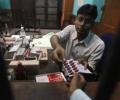
It will bring 348 essential drugs under price control.
A government committee that is looking into the possibility of pre-marketing price negotiation for patented medicines is likely to recommend a lenient view on such medicines, it is learnt. A government committee that is looking into the possibility of pre-marketing price negotiation for patented medicines is likely to recommend a lenient view on such medicines, it is learnt.

The GoM has proposed to cap prices of these medicines at the weighted average price of drugs with a minimum of one per cent market share, officials aware of the development said.
Move is the first in a series of steps to help pharma industry.
The Union ministry of chemicals and fertilisers has initiated a move to bring all essential medicines sold in the country under a price cap.
"Since the inception of National Pharmaceutical Pricing Authority in August 1997, it has raised a total demand of Rs 1,626.51 crore till October 15 this year, for recovery towards overcharged amount in 585 cases," Minister of State in the Ministry for Chemical and Fertilisers B K Handique informed Rajya Sabha in a written reply. Under the provisions of Drug Price Control Order 1995, NPPA has been able to recover Rs 131.71 crore (Rs 1.31 billion).
Anti-infectives like Ivermectin, Mupirocin and Meropenem have also been added to the list, taking the total drugs under it to 384.

Ahead of a meeting of oil producers' cartel OPEC, India on Tuesday said the current oil prices are "very challenging" and rates need to be a "little bit sober" lest they impact a consumption-led recovery of the global economy. Oil Minister Dharmendra Pradhan, who last week again urged OPEC to phase out its production cuts, said India is a price-sensitive market and it will buy oil wherever it gets competitive rates. The rebound in international oil prices from lows hit last month on the back of demand recovery has led to a spike in petrol and diesel retail prices in India.

While extending the National List of Essential Medicines will help patients, care has to be taken to ensure this does not lead to a slowdown of production as has happened in case of DPCO drugs.
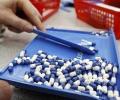
Competition in the US pharmaceutical market swelled in recent years, with increasing generic penetration.
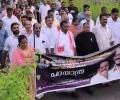
The specter of how the Munambam issue was exploited during the November by-elections is proof of the price Kerala is paying for its emergent politics. Controversies become the stuff of slow-burn and brinkmanship. The former promises mileage; the latter searches for an advantage, notes Shyam G Menon.
The department of pharmaceuticals turned down a review petition by drugmaker Cipla against a price fixation order by the National Pharmaceutical Pricing Authority, slashing the price of Dytor Plus, a medicine for kidney and heart ailments.
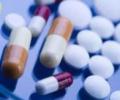
The panel of representatives from various ministries and chaired by B K Singh, director, department of pharmaceuticals, has suggested the government negotiate prices of patented medicines based on reference prices of such drugs in other countries such as Britain, Canada, France, Australia and New Zealand.

Within six months, outlets carrying Vicks jumped from 60,000 pharmacies to 750,000 general stores. The trade boycott collapsed. Consumers were happy, finding Vicks now at every street corner. A fascinating excerpt from Gurcharan Das's Another Sort of Freedom.
Sharad Pawar says final draft will go to Cabinet before Tuesday.
